You’ve likely seen headlines about the Google Willow Quantum Chip and wondered if it truly marks a turning point. Announced on December 9, 2024, by Google Quantum AI, this advanced processor delivers major gains in error correction and raw speed. It shifts quantum computing from experimental demos to a clear engineering path. By 2026, you can expect it to influence everything from new medicines to our understanding of physics. This guide breaks down what the chip does, why it matters, and how it sets the stage for practical quantum systems.
What Is the Google Willow Quantum Chip?
Core Design and Key Hardware Specs
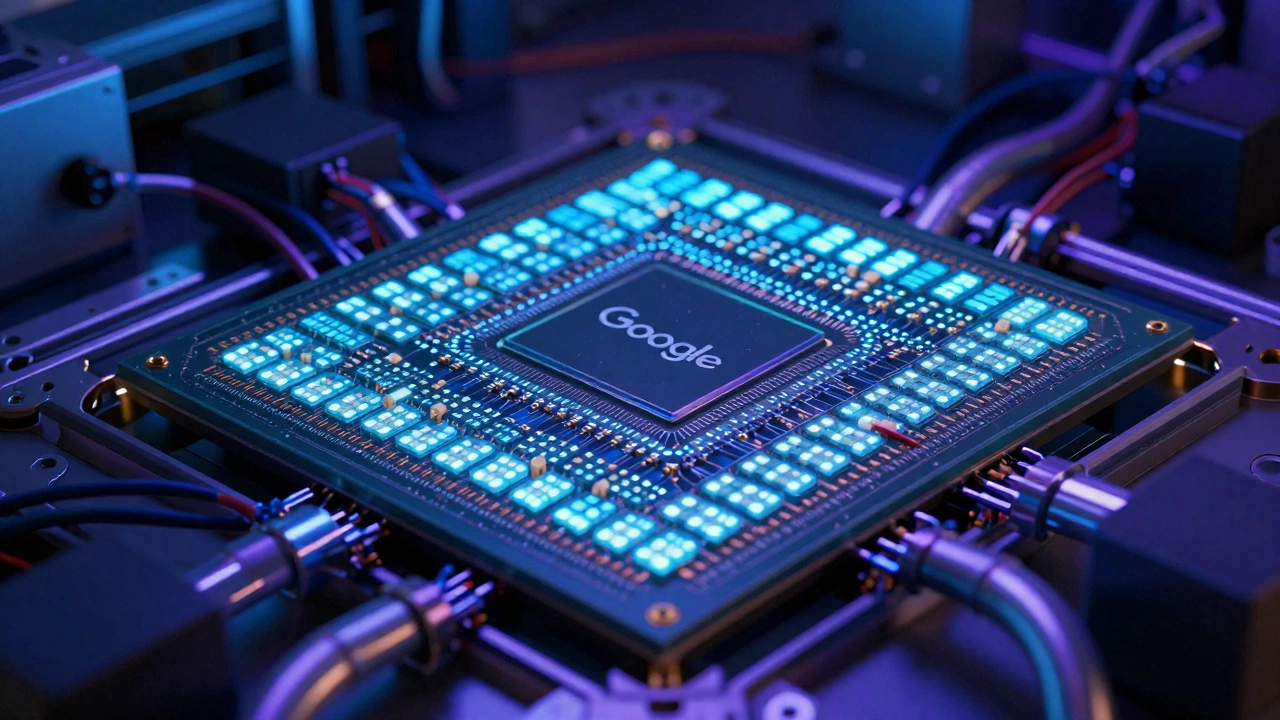
The Google Willow Quantum Chip is a 105-qubit superconducting transmon processor built in Santa Barbara, California. It improves on its predecessor with about five times longer coherence times, averaging 68 to 100 microseconds. Better fabrication techniques, optimized circuits, and smart engineering of how qubits interact with their environment make this possible.
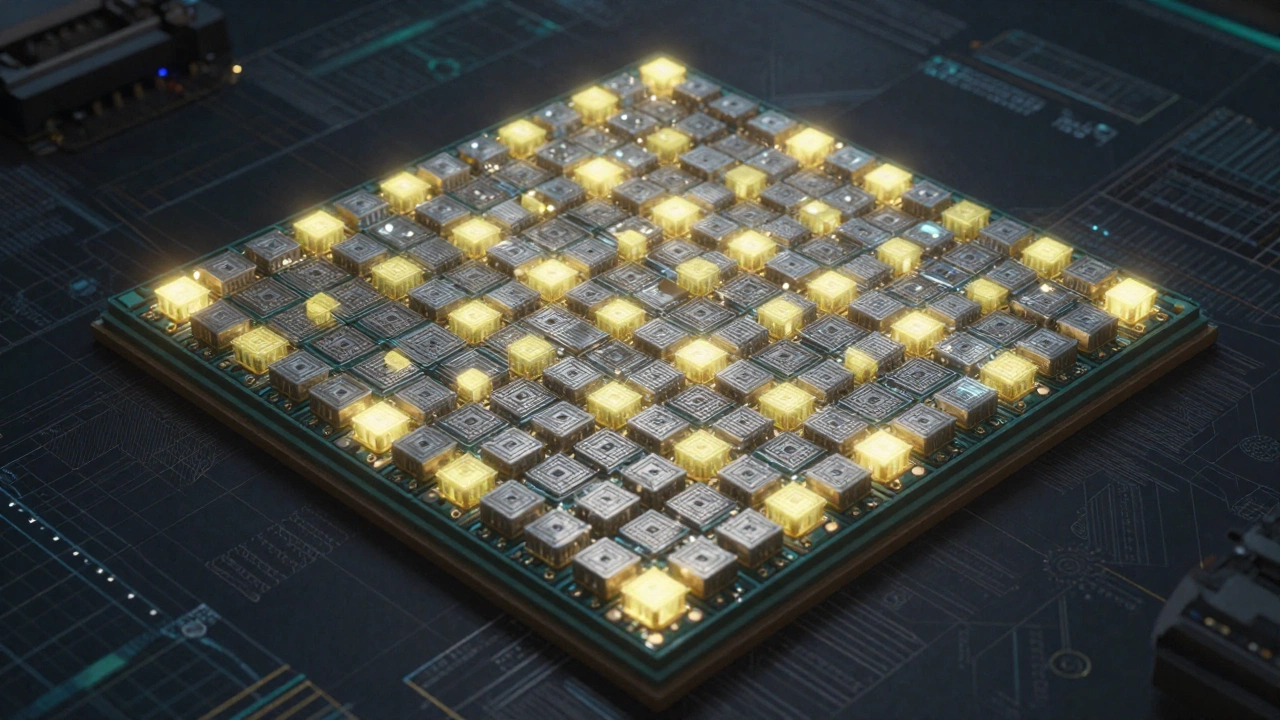
You see these advances in its square-grid layout with average connectivity around 3.47. The chip runs at temperatures near absolute zero inside a dilution refrigerator. These details let it perform complex operations with far less noise than earlier models. Real-time decoding happens in about 63 microseconds at certain scales, keeping everything stable across a million cycles.
How It Builds on the Sycamore Foundation
Willow succeeds the Sycamore chip that first claimed quantum supremacy in 2019. While Sycamore showed a task no classical computer could match quickly, Willow takes that further with stronger hardware and error-handling tools. The focus moves from raw demonstrations to systems that stay reliable as they grow.
One clear upgrade appears in repetition-code tests. These reached an error floor near 10^{-10} per cycle and ran almost 10 billion cycles with high accuracy. Such stability comes from reduced correlated errors that once appeared roughly once per hour.
| Aspect | Sycamore | Willow |
|---|---|---|
| Coherence Time | Around 20 μs | 68–100 μs |
| Error Suppression | Limited scaling | Exponential below threshold |
| Logical Qubit Lifetime Gain | Baseline | 2.4 times physical best |
Manufacturing Process and Team Behind It
Experts at Google Quantum AI, including Julian Kelly and teams led by Hartmut Neven, oversaw every step. The chip’s success rests on years of refining superconducting materials and control electronics. You benefit from this focused effort because it proves quantum systems can scale when hardware and software align.
The Google Willow Quantum Chip Error Correction Breakthrough
Why Error Correction Has Been So Difficult
Quantum bits lose information quickly due to noise from their surroundings. For decades scientists sought a way to correct these errors without destroying the delicate quantum states. Traditional approaches increased errors as systems grew larger. The Google Willow Quantum Chip changes that equation.
It uses surface codes, where groups of physical qubits protect one logical qubit. The key insight: operate below a certain error threshold so that larger codes become more reliable, not less. This fulfills a nearly 30-year goal in the field.
Surface Codes and Exponential Error Suppression
Researchers tested distance-5 and distance-7 surface codes on the chip. A distance-7 code employs roughly 101 physical qubits for one logical qubit. They measured a logical error rate of about 0.143 percent per cycle at the largest distance.
Each time the code distance grew by two steps, the logical error dropped by a factor of roughly 2.14. The logical qubit lifetime beat the best physical qubit by 2.4 times. These numbers appeared only once in testing and show clear exponential improvement. Michael Newman and Kevin Satzinger noted this is the first processor where bigger error-corrected qubits perform exponentially better.
Real-Time Decoding and Long-Running Tests
The system maintained performance across a million cycles thanks to fast decoding. Complementary bit-flip repetition codes reached extreme scales, proving the hardware’s stability. These results move quantum computing into a phase where small hardware gains produce large reliability jumps.
Speed and Quantum Advantage Demonstrated by Willow
The Random Circuit Sampling Benchmark
On a random circuit sampling task, the Google Willow Quantum Chip finished in under five minutes. The same job would take a top classical supercomputer like Frontier an estimated 10 septillion years. That span exceeds the age of the universe by far.
This extends the 2019 supremacy claim with higher fidelity and more qubits. While random circuit sampling has limited immediate uses, it highlights how quantum interference creates patterns classical machines cannot efficiently copy.
Quantum Echoes Protocol and Verifiable Results
In 2025 Google introduced the Quantum Echoes method, also known as measuring out-of-time-order correlators. The chip runs a circuit forward, adds a tiny change, then runs it backward. The returning overlap reveals how information scrambles in quantum systems.
Using up to 103 qubits, it completed certain tasks 13,000 times faster than the best classical algorithms. One example took Willow just over two hours versus three years on a supercomputer. Unlike pure sampling, these results produce measurable observables that other machines can verify.
What Quantum Echoes Reveal About Nature
The protocol probes quantum chaos and many-body physics. It connects to molecular modeling similar to advanced NMR techniques used in chemistry. Insights could also touch black-hole physics through holographic ideas. Hartmut Neven and colleagues see it as an early bridge toward useful scientific computation.
Practical Applications and 2026 Outlook
Potential Impact on Chemistry, Medicine, and Energy
By 2026 the Google Willow Quantum Chip opens doors to better molecular simulations. You could see faster discovery of new materials for batteries or drugs tailored to specific diseases. Climate modeling and optimized food production also sit on the horizon.
The verifiable advantage from Quantum Echoes gives researchers tools to study spin interactions in molecules with unprecedented detail. These steps mark the shift from proof-of-concept to hybrid quantum-classical workflows that solve real problems.
Researcher Access and Global Partnerships
In December 2025 Google teamed with the UK government to let researchers use Willow for practical application hunting. This program lets teams test ideas in chemistry and optimization without building their own systems. Similar efforts will likely expand in 2026.
Such access accelerates discovery. Teams can focus on algorithms instead of hardware maintenance. Early wins may appear in logistics, finance, and fundamental science questions that classical computers find intractable.
Security Considerations in the Quantum Era
Powerful quantum machines threaten current encryption methods. Experts urge adoption of post-quantum cryptography to protect data today. The “harvest now, decrypt later” risk grows as chips like Willow prove scalable error correction.
You should consider how organizations update blockchain and communication systems. Governments invest heavily, with efforts in the US, China, and Europe shaping a global technology race.
Challenges That Still Remain
Scaling to Useful Logical Qubits
Despite progress, Willow operates as an early platform. Useful applications in quantum chemistry demand hundreds of logical qubits with even lower error rates. Correlated errors and decoder speed must improve at larger sizes.
The community now treats quantum computing as an engineering discipline rather than pure physics. Incremental gains in fabrication and control will compound quickly thanks to the below-threshold operation.
Realistic Expectations for 2026
Some benchmarks like random circuit sampling lack direct applications. Skeptics question the exact scope of advantage on practical tasks. Still, the exponential error suppression result stands as a landmark that settles long-standing questions about scalability.
By late 2026 you will likely see roadmaps targeting a million logical qubits. This scale could transform drug design, materials science, and energy storage. The chip does not solve every problem overnight, yet it provides the foundation.
Broader Implications for Science and Society
Results from Willow lend weight to ideas like the many-worlds interpretation of quantum mechanics, though researchers stop short of claiming proof. The technology prompts fresh thinking about computation itself.
Investment is rising. Hybrid systems that pair quantum processors with classical AI could speed discovery across fields. Your world may soon include products and insights born from these machines.
Your Role in the Quantum Future
Staying Informed About Rapid Advances
Quantum news moves fast. Follow primary sources like the Nature papers and Google Quantum AI updates to separate hype from reality. Understand key terms such as surface codes and logical qubits so you can evaluate claims.
By 2026 educational resources will grow. You can explore how quantum principles apply to your industry, whether in software, logistics, or research.
Preparing Systems and Skills Today
Organizations should inventory cryptography vulnerable to future quantum attacks. Developers can experiment with quantum-inspired algorithms that run on classical hardware first. This builds intuition for when true quantum resources become available.
Students and professionals alike benefit from learning linear algebra and probability. These foundations help decode the next wave of breakthroughs.
Why 2026 Feels Like a Tipping Point
The Google Willow Quantum Chip proves error correction scales. It turns quantum computing into a predictable engineering challenge. While full-scale fault-tolerant machines remain years away, the trajectory is now visible.
You stand at the start of a transformation that could reshape medicine, clean energy, and our grasp of the universe. The coming years will test how quickly we turn these lab results into tools that improve daily life. The foundation is solid, and the pace is picking up.