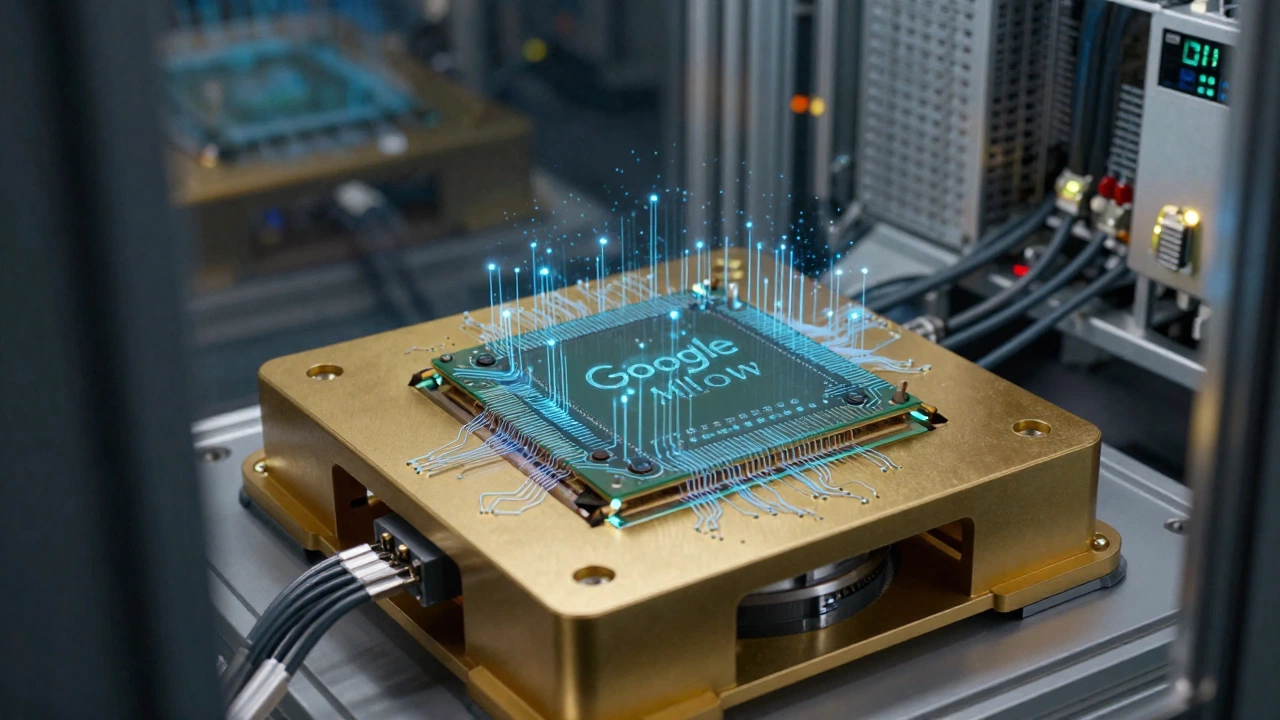
The Google Willow Quantum Chip stands as a pivotal advancement that will reshape computing by 2026. You have likely followed the buzz around quantum technology. This 105-qubit processor tackles the biggest barrier: errors that destroy calculations. With its success in error correction, the chip moves the field from uncertain experiments to focused engineering. You will soon see its influence in drug design, materials, and complex simulations that classical computers cannot touch.
What Makes the Google Willow Quantum Chip Special
Evolution From Earlier Google Processors
The path to the Google Willow Quantum Chip started with the 53-qubit Sycamore. You remember how Sycamore first showed quantum supremacy in 2019. Willow improves on every level through better fabrication methods and circuit tweaks. Its square grid offers average connectivity of 3.47. These upgrades create a stable base for running longer operations without immediate failure.
Engineers in Santa Barbara focused on reducing noise at every step. The result feels like a reliable tool instead of a fragile prototype. You gain confidence that quantum systems can grow without collapsing under their own complexity.
Technical Specifications That Set It Apart
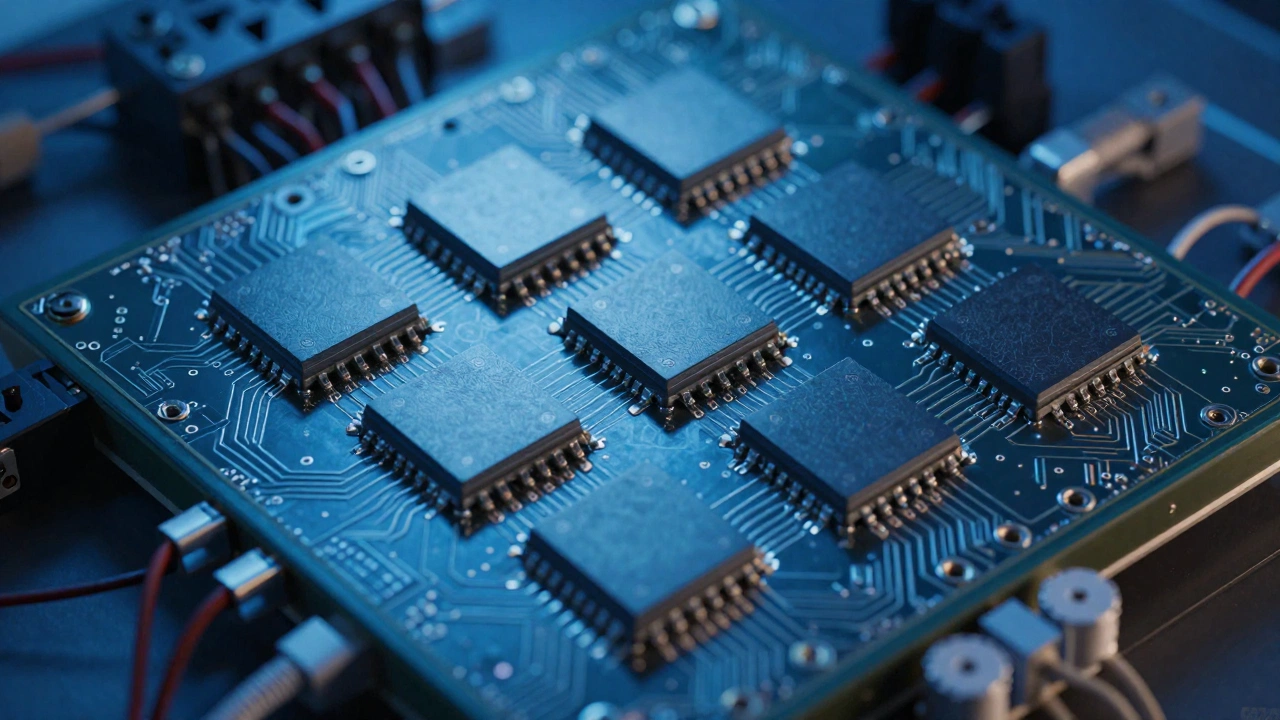
Coherence time reaches about 100 microseconds on Willow. This allows qubits to hold information long enough for meaningful work. Participation ratio engineering cuts down on unwanted energy loss. Circuit parameter optimization further boosts fidelity across the 105 superconducting transmon qubits.
These specs matter because they support scalable designs. You can picture teams building on this foundation to reach larger machines. The chip proves small changes create big leaps when applied thoughtfully.
Why Manufacturing Location Matters
Production happens at Google Quantum AI facilities in Santa Barbara, California. This controlled environment ensures precision at microscopic scales. A new factory there will speed future iterations. You benefit indirectly as faster development cycles bring useful quantum tools closer to reality.
Local expertise in superconducting tech keeps the process agile. Each generation learns from the last without delays from outsourcing.
The Breakthrough in Error Correction
How Surface Codes Protect Quantum Information
Errors plague all quantum hardware. The surface code spreads one logical qubit across many physical ones. It detects and fixes mistakes on the fly. The Google Willow Quantum Chip demonstrates this code at distances five and seven.
You see the lattice pattern where each qubit connects to neighbors. Measurements on extra qubits reveal errors without disturbing the main computation. This method has been theoretical for decades since Peter Shor’s early work.
Crossing the Threshold for Scalable Correction
The true milestone is below-threshold operation. Logical error rates fell exponentially as code distance grew. At distance seven, the system stayed stable. One measured rate sat near 0.14 percent per cycle.
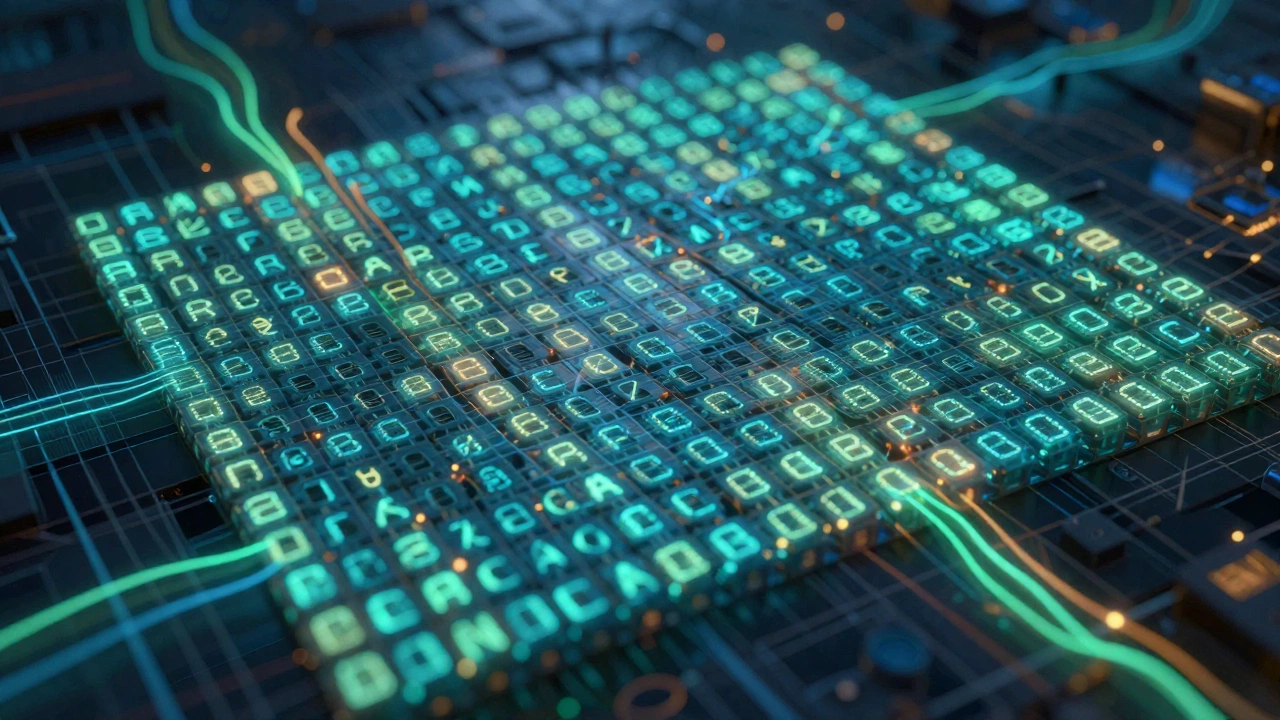
This result ends a 30-year debate. Adding qubits for correction now reduces overall errors instead of increasing them. The Google Willow Quantum Chip turns quantum error correction from a physics puzzle into engineering work. Your confidence in large-scale machines grows with this proof.
Shift From Research to Engineering Focus
Teams no longer ask if correction can work. They now ask how quickly they can scale it. The Nature paper by Rajeev Acharya and colleagues details these experiments. It shows logical memory operating reliably on a 101-qubit patch.
You will read more roadmaps targeting fault-tolerant systems. This chip marks the turning point where practical applications move from distant dreams to near-term plans.
Demonstrating Clear Quantum Advantage
Random Circuit Sampling Results That Stun Experts
Willow finished a random circuit sampling task in under five minutes. The same job would take the Frontier supercomputer roughly 10 septillion years. This gap exceeds the age of the universe many times over.
Such benchmarks quiet doubts about quantum supremacy. You recognize that certain problems belong to quantum hardware. The Google Willow Quantum Chip settles these debates with hard numbers rather than hype.
Quantum Echoes and Information Scrambling
October 2025 brought results on out-of-time-ordered correlators. These quantum echoes measure chaos and information spread in quantum systems. The chip ran the test 13000 times faster than top classical algorithms.
A more complex version took Willow two hours versus an estimated three years on conventional supercomputers. Published findings suggest uses in molecular chemistry and even black hole physics. You see how these experiments bridge theory and hardware.
Real Meaning Behind the Speedups
These tests go beyond showing off. They verify quantum behavior that classical machines cannot efficiently simulate. Hartmut Neven noted connections to ideas from David Deutsch and Hugh Everett about parallel realities.
If you have checked Google willow quantum chip reddit threads, users debate practical value. Yet the verifiable advantage on real hardware points toward future utility. Searches for Google willow quantum chip review often highlight this shift from proof to progress.
Applications and Impact Across Industries in 2026
Accelerating Drug Discovery and Chemical Modeling
Accurate molecular simulations demand error-free qubits. The Google Willow Quantum Chip brings that closer by suppressing errors exponentially. You could see new medicines designed in weeks instead of years.
Quantum echoes data specifically helps predict reaction pathways. Pharmaceutical teams plan to test early access for targeted molecule studies. This year marks the start of tangible laboratory use.
Advances in Materials Science and Financial Modeling
Better batteries or room-temperature superconductors may emerge from precise simulations. Finance gains optimized risk calculations that consider countless scenarios at once. Energy sectors look at efficient grid management.
No Google quantum chip price exists yet because the system remains a research instrument. Still, companies watch closely. Early 2026 experiments will reveal which problems yield the first commercial edges.
Boosting AI Development and Complex Optimization
Hybrid quantum-classical systems could train better models faster. The chip’s capabilities align with NVIDIA’s CUDA-Q platform for noise-aware simulations. You might use these tools to solve logistics or climate models that overwhelm today’s computers.
Discussions around Google willow multiverse theories add philosophical flavor, yet the engineering gains remain the focus. 2026 will test these intersections through real proposals.
Accessing the Chip Via the Early Access Program
Program Details and Timeline for Researchers
Google opened the Willow Early Access Program in late March 2026. Selected teams receive limited hardware time for custom experiments. Proposals required executable circuits and clear publication goals. Deadlines fell in May with decisions by July.
You must assemble a dedicated group including PhD-level experts. The process favors work that stresses the chip beyond easy classical checks. This filters for high-impact ideas only.
Partnerships Expanding Global Participation
Collaboration with the UK’s National Quantum Computing Centre adds grants and broader access. International researchers can join through verified institutions. These links speed knowledge sharing and avoid duplicated effort.
The program manages hardware limits carefully. Anonymized submissions promote fairness. You see a model that balances openness with protection of sensitive prototypes.
Types of Projects That Fit the Criteria
Accepted work targets new algorithms, fidelity tests, or scientific questions only quantum hardware can answer. Examples include advanced error mitigation or chaos studies building on quantum echoes.
- Clearly defined quantum circuits ready to run
- Measurable results suitable for peer-reviewed papers
- Team members committed full time to the project
- Institutional approval and eligibility checks
- Focus on problems beyond efficient classical simulation
Such standards ensure the Google Willow Quantum Chip generates useful data that pushes the entire field forward.
The Road Ahead and Why 2026 Feels Pivotal
Google’s Clear Path to a Million-Qubit System
Current milestones place the company on its third major checkpoint. The vision includes a fault-tolerant machine capable of useful chemistry and optimization tasks. You can track steady progress as each stage builds directly on Willow’s success.
Improved coherence and error rates form the base. Additional factories will supply components at scale. Partnerships with hardware and software firms accelerate the timeline.
Current Limitations You Should Understand
Logical error rates still sit far above the one-in-a-million target needed for long algorithms. Full universal logical gates remain under development. The chip operates in the noisy intermediate-scale era despite its advances.
Critics correctly note the distance to broad commercial use. Yet the exponential suppression of errors changes the conversation. Engineering problems are solvable with time and resources.
How This Chip Redefines Your Expectations
By late 2026 you will likely encounter quantum-enhanced tools in research labs and early industry pilots. Investor interest has already lifted related stocks. The shift from physics questions to engineering delivery makes this a landmark period.
Whether you follow Google willow quantum chip breakthrough updates or simply sense the growing momentum, one fact stands clear. The Google Willow Quantum Chip proves reliable quantum computing is no longer a matter of if, but when. Stay alert as applications begin to surface. The next few years will move faster than you expect.