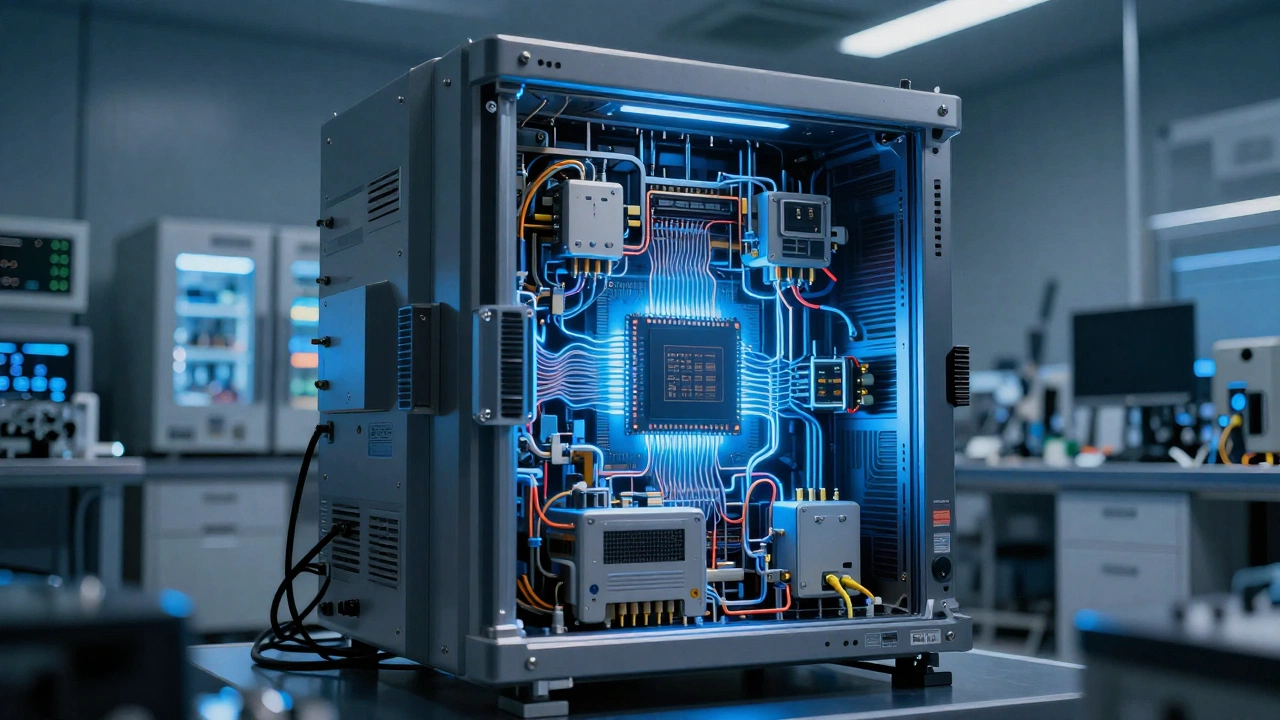
The tech world is always evolving, but few developments have the potential to reshape everything quite like quantum computing. Experts believe this technology could tackle issues that leave today’s supercomputers stumped for days or even years. At its core, it uses the strange rules of quantum physics to process data in ways that seem almost magical. Rather than simple on or off states, the building blocks allow for much more complexity. This opens doors to calculations involving enormous datasets or intricate simulations. Tech giants have been quietly building prototypes while sharing their progress with the public. Interest has grown as demonstrations show real advantages over conventional methods in specific tasks. It’s an exciting time because we’re seeing the transition from laboratory experiments to potential business applications. Understanding this shift helps explain why so many organizations are placing big bets on its success. The field draws from physics that continues to challenge our traditional views of reality and computation.
What Makes Quantum Computing Unique
Several quantum properties make these systems stand out from anything we’ve used before. Superposition means each qubit can represent multiple values at once, vastly increasing processing capability as you add more units. Then there’s entanglement, which creates connections between qubits so that changing one affects the others instantly. This linkage is what allows for the parallel processing power that sets quantum systems apart. Another important aspect is interference, where probabilities can be amplified or canceled out to find the right answer more efficiently. Scientists have spent decades trying to control these effects in a stable way. The fragility of the quantum state means any slight disturbance from heat or electromagnetic waves can cause errors in the output. That’s why most current devices operate in special refrigerators that reach temperatures close to absolute zero. These conditions are necessary to maintain the delicate balance required for accurate computations. Early machines had only a handful of qubits, but numbers have grown steadily with each new generation of hardware.
Notable Achievements So Far
Progress in quantum computing has accelerated in the past few years with some impressive milestones that caught global attention. Google made headlines when its Sycamore processor completed a task in 200 seconds that would have taken the best classical supercomputer approximately 10,000 years. IBM has focused on scaling up their systems and improving reliability through better error correction techniques with their growing qubit counts. Other players like IonQ and Rigetti are exploring different hardware approaches such as trapped ions or superconducting circuits to find the most viable path forward. Each method has its strengths and the competition is driving faster innovation across the board. Universities and research labs around the world are also contributing important theoretical advances that help guide the practical development of these machines. These collective efforts suggest that useful quantum computers for specific applications may arrive sooner than many expected initially. The steady increase in coherence times shows that engineers are getting better at preserving quantum states for longer periods.
Potential Uses Across Different Sectors
The real excitement comes from thinking about what problems quantum computers could solve once they reach maturity. In the pharmaceutical industry, they could model complex molecular interactions to speed up drug development and reduce costs associated with traditional trial and error methods. Financial institutions see value in using them for risk analysis and optimizing investment portfolios with greater precision than current tools allow. Logistics companies might find better routing solutions for global shipping networks that save fuel and time on a massive scale. Climate scientists hope to create more accurate models of environmental systems to understand and combat global warming effects more effectively. Even artificial intelligence could get a boost because quantum methods might train machine learning models much faster than before. Some researchers are looking at how quantum communication could create unhackable networks using quantum key distribution protocols. Each of these areas stands to gain from the ability to handle calculations involving massive combinations of variables that overwhelm regular computers. The technology isn’t ready for all these tasks yet but the path forward looks promising based on current trajectories and investments.
Challenges That Scientists Must Address
Despite the progress, significant hurdles stand in the way of widespread adoption for quantum computing systems. Qubits are extremely sensitive to their surroundings, leading to high error rates in calculations that can compromise results. Developing effective error correction requires many additional qubits to protect the information, which increases the complexity and size of the machines substantially. Building and maintaining the infrastructure for these systems is expensive, requiring specialized facilities and highly trained personnel to operate them safely. There’s also the question of how to program these devices effectively since they work so differently from classical computers in fundamental ways. New algorithms and software tools are needed to translate real world problems into quantum friendly formats that can be executed properly. Scalability remains a big issue as adding more qubits brings additional challenges in controlling them all at once without interference. International collaboration and continued investment will be essential to overcome these obstacles in the coming years. Various governments have launched national strategies to ensure they don’t fall behind in this strategic technology area that could define economic competitiveness.
Looking ahead, quantum computing could become part of a hybrid approach where classical and quantum systems work together on different parts of a problem for optimal results. This might accelerate the timeline for seeing practical benefits in everyday applications. As the technology matures, we may see it integrated into cloud services so that businesses can access it without owning their own hardware setups. Education programs are starting to train the next generation of quantum engineers to fill the growing demand for skilled workers in this niche. The ethical implications also deserve attention, particularly around security and who gets access to these powerful tools as they develop. While it’s hard to predict exactly when quantum computers will become commonplace, the momentum is clearly building with each passing breakthrough. Staying informed about these developments will help us prepare for the changes they will bring to our digital world. The journey is just beginning but the possibilities are truly remarkable for those paying attention.