The US-Iran Conflict Has Become the Defining Crisis of 2026
If you’ve been anywhere near a news feed in the past 48 hours, you already know the situation in the Middle East has escalated dramatically. The US-Israel military campaign against Iran — which kicked off in late February 2026 after strikes that killed Supreme Leader Ayatollah Ali Khamenei — is now producing daily headlines that feel like they belong in a geopolitical thriller. But this is very real, and the consequences are rippling across markets, energy prices, and diplomatic channels worldwide. On April 3, Iran shot down a US F-15E Strike Eagle inside Iranian territory, marking the first successful downing of a manned American aircraft in Iran in decades. One crew member was rescued by US special forces, but search operations continue for at least one missing airman. Iran has even offered rewards for capturing US personnel alive — a chilling escalation that underscores just how dangerous this theater has become.
The aerial losses don’t stop there. Reports indicate a second US jet — possibly an A-10 — was also downed, though details on crew recovery remain unclear. These incidents have directly challenged American claims of air superiority in the region, which had been a cornerstone of the campaign’s messaging. President Trump was briefed on the fighter jet downing and responded publicly by claiming the war is “wrapping up” and that Iran has been “completely decimated.” He also warned of further strikes, including a threat to bomb Iran “back to the Stone Ages.” That kind of rhetoric, regardless of where you stand politically, signals that de-escalation isn’t on the immediate horizon. And that should concern everyone tracking this situation closely.
Airstrikes, Retaliation, and a Nuclear Facility Under Fire
Between April 3 and 4, US and Israeli forces conducted multiple waves of airstrikes targeting military installations, ballistic missile storage facilities, weapons manufacturing sites, and R&D centers in Tehran. A cement plant in Bandar Khamir was hit. Petrochemical facilities in Mahshahr were struck, wounding at least five people. But the most alarming detail? A building near the Bushehr nuclear facility was targeted for the fourth time since the campaign began. That latest strike killed a security guard and damaged a support building. Any military action near nuclear infrastructure carries catastrophic risk, and the repeated targeting of Bushehr has drawn sharp international criticism. The line between strategic military action and environmental disaster feels uncomfortably thin right now.
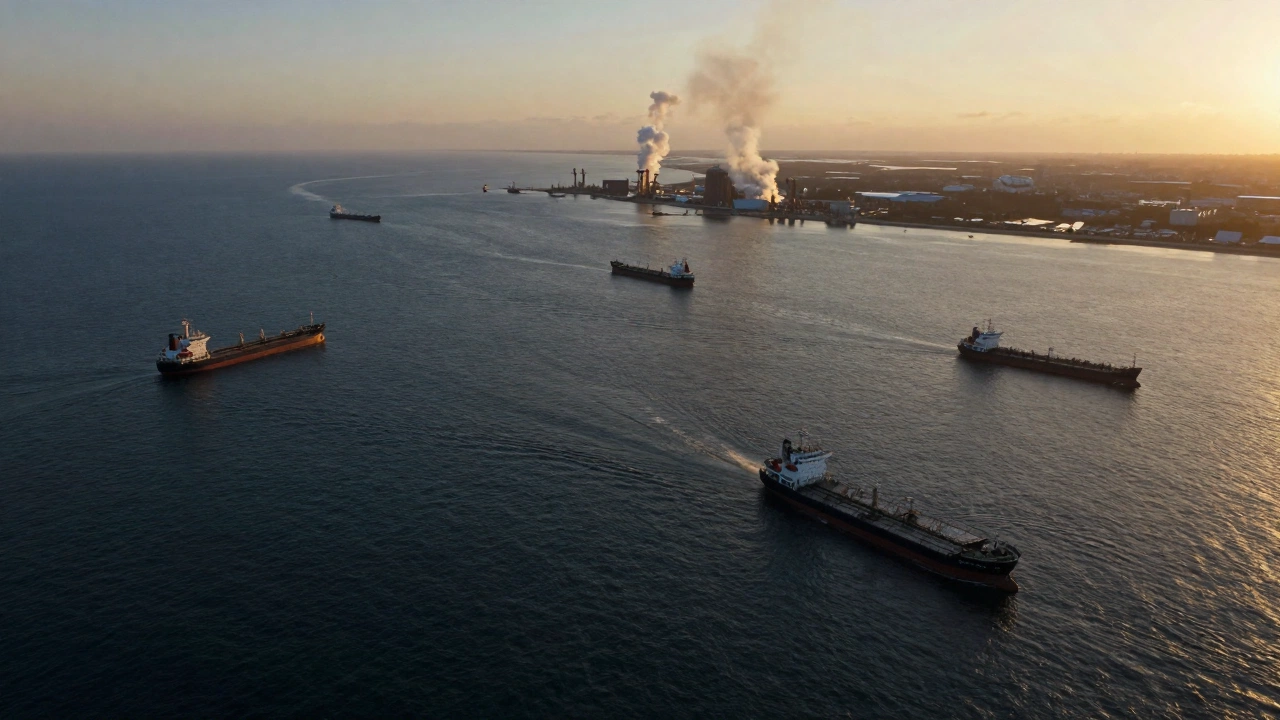
Iran hasn’t absorbed these strikes passively. Missiles were launched toward Israel, striking residential areas in central Israel, the Negev, and Rosh Haayin. At least one civilian — a 45-year-old man in Bnei Brak — was injured by glass shrapnel from the blasts. Debris from intercepted drones and missiles also reached Dubai, damaging buildings including an Oracle office complex, though no injuries were reported there. Iranian Parliament Speaker Mohammad Bagher Ghalibaf has threatened to disrupt major shipping lanes, specifically naming the Bab-el-Mandeb Strait and the Strait of Hormuz. Given that Iran’s influence touches roughly 25% of global oil and gas supply routes, those aren’t empty words. Energy markets are already pricing in the fear.
Regional Spillover Is Expanding Fast
This conflict hasn’t stayed contained within Iranian and Israeli borders. In Lebanon, Israeli forces destroyed bridges — including one connecting Sohmor and Mashghara — and launched strikes against Hezbollah infrastructure in Beirut’s southern suburbs. Explosions near a United Nations facility wounded three Indonesian peacekeepers, two of them seriously. That’s the kind of incident that typically triggers emergency Security Council sessions and calls for accountability. The situation in Iraq is equally grim. Strikes at the Shalamcheh border crossing killed at least one civilian and wounded others, forcing the crossing to close entirely. A Popular Mobilisation Forces fighter was killed near the Syria border. And a drone strike ignited fires at oil facilities west of Basra, adding fuel — literally — to an already volatile energy picture across the region.
Beyond the immediate conflict zones, an Indian seafarer was killed in a missile strike off the coast of Oman, a reminder that this war’s reach extends far into international waters. Since the campaign intensified, the US military has reported 13 service members killed and hundreds wounded — 247 Army personnel and 63 Navy, with additional breakdowns by rank. Iranian and regional casualty figures remain fragmented and harder to verify, but specific deaths include the Bushehr security guard, Iraqi civilians and fighters, and the wife of an Iranian foreign policy official who was killed in what Iranian President Masoud Pezeshkian described as an assassination attempt. The human toll is mounting daily, and reliable numbers are increasingly difficult to pin down amid the fog of war.
Diplomacy Stalls While Tensions Climb
Here’s where things get particularly frustrating. Iran rejected a US-proposed 48-hour ceasefire that was reportedly extended around April 1 through a third-party intermediary. Mediation efforts involving Pakistan have also hit walls. Italian Prime Minister Giorgia Meloni and Saudi PM Mohammed bin Salman have held discussions about the Strait of Hormuz situation, but no concrete agreements have materialized. The diplomatic track feels frozen, even as the military one accelerates. US Defense Secretary Pete Hegseth has been front and center in briefings, projecting confidence in the campaign’s trajectory. But confidence and resolution are two very different things. Without a viable diplomatic off-ramp, this conflict risks becoming an open-ended commitment with escalating costs — both human and financial.
The conflict has also been described as one of the deadliest periods for journalists in the broader region, particularly in related contexts like Gaza. Press freedom organizations have raised alarms about the dangers facing reporters covering these overlapping theaters of war. When information becomes a casualty alongside people and infrastructure, the public’s ability to understand what’s actually happening on the ground degrades rapidly. And in a media environment already saturated with competing narratives, that’s a problem that compounds every other problem. Reliable reporting from conflict zones has never been more important — or more dangerous for the people doing it.
Market Volatility and Tariff Fallout Are Compounding the Pain
The Iran conflict alone would be enough to rattle global markets. But layer on President Trump’s tariff policies — including escalated “Liberation Day” measures — and you’ve got a recipe for serious financial turbulence. The S&P 500 and Dow Jones have experienced brutal sessions recently, with the Dow dropping between 1,700 and 2,000+ points in single-day sell-offs in related trading periods. The so-called “Magnificent 7” tech stocks shed approximately $900 billion in value in one particularly devastating session. Asian and European markets followed suit with broad declines. China responded with retaliatory tariffs of 34% on certain US goods, further straining an already tense trade relationship. The phrase “max pessimism” has been circulating among analysts, and recession fears are no longer whispered — they’re being discussed openly on financial news networks.
There is one bright spot in the economic data. The US economy added 178,000 jobs in March 2026, beating analyst expectations. That number provides some cushion against the narrative of an economy in free fall, but it doesn’t erase the broader anxiety. Oil prices have surged on the back of both the Iran conflict and tariff-driven uncertainty, which hits consumers directly at the gas pump and indirectly through higher costs across supply chains. Trump has framed his tariff strategy as a corrective measure aimed at trade imbalances and a way to boost domestic manufacturing. Whether that framing holds up against the reality of portfolio losses and price increases will likely define the economic debate heading into the second half of 2026.
Domestic Political Shifts and Other Headlines Worth Watching
On the US political front, there’s been significant reshuffling within the Trump administration. Reports indicate the president has fired or lost several national security aides, and cabinet-level changes include Pam Bondi stepping into the role of Attorney General. The White House has also requested a staggering $1.5 trillion defense budget — a figure that reflects both the cost of the Iran campaign and a broader military posture that shows no signs of scaling back. That budget request will face intense scrutiny in Congress, especially from lawmakers already uneasy about the conflict’s open-ended nature. The political dynamics around war funding, combined with tariff-driven economic anxiety, create a volatile environment for both parties heading into midterm positioning.
Beyond the war and markets, other stories are competing for attention. Deadly storms swept through parts of the US South and Midwest, causing significant damage and casualties. In Southern California, wildfires forced evacuations across several communities. On the international stage, Pope Leo XIV led a Good Friday procession in Rome — notable because certain elements of the ceremony hadn’t been performed in decades. Sports fans were buzzing about NCAA basketball upsets during tournament play. These stories might feel secondary against the backdrop of a major military conflict and economic uncertainty, but they reflect the full spectrum of what people are actually talking about, searching for, and processing on any given day in April 2026.
What Comes Next Is Anyone’s Guess — But Here’s What to Watch
The next 72 hours will be critical on multiple fronts. Search and rescue operations for the missing US airman continue inside Iranian territory, and any outcome there — rescue, capture, or worse — will shape public sentiment and political decision-making in Washington. Further strikes on or near Bushehr will escalate international pressure on both the US and Israel. Iran’s threats to shipping lanes in the Strait of Hormuz could materialize at any point, which would send oil prices into genuinely uncharted territory and drag shipping insurance rates up with them. The diplomatic channel, however faint, needs oxygen — and right now it’s getting very little.
On the economic side, watch how markets react to the combination of geopolitical risk and tariff escalation over the coming week. If the Dow continues its slide and China follows through with additional retaliatory measures, the recession narrative will gain serious momentum. The jobs report provides a temporary buffer, but consumer confidence indicators and corporate earnings reports in the weeks ahead will tell a much clearer story. For now, we’re in a period where geopolitics, economics, and domestic politics are all colliding simultaneously. That’s not unprecedented, but it’s rare enough to warrant close attention. Stay informed, cross-reference your sources, and don’t let any single headline define your understanding of what’s happening. The full picture is complicated — because the reality is complicated.