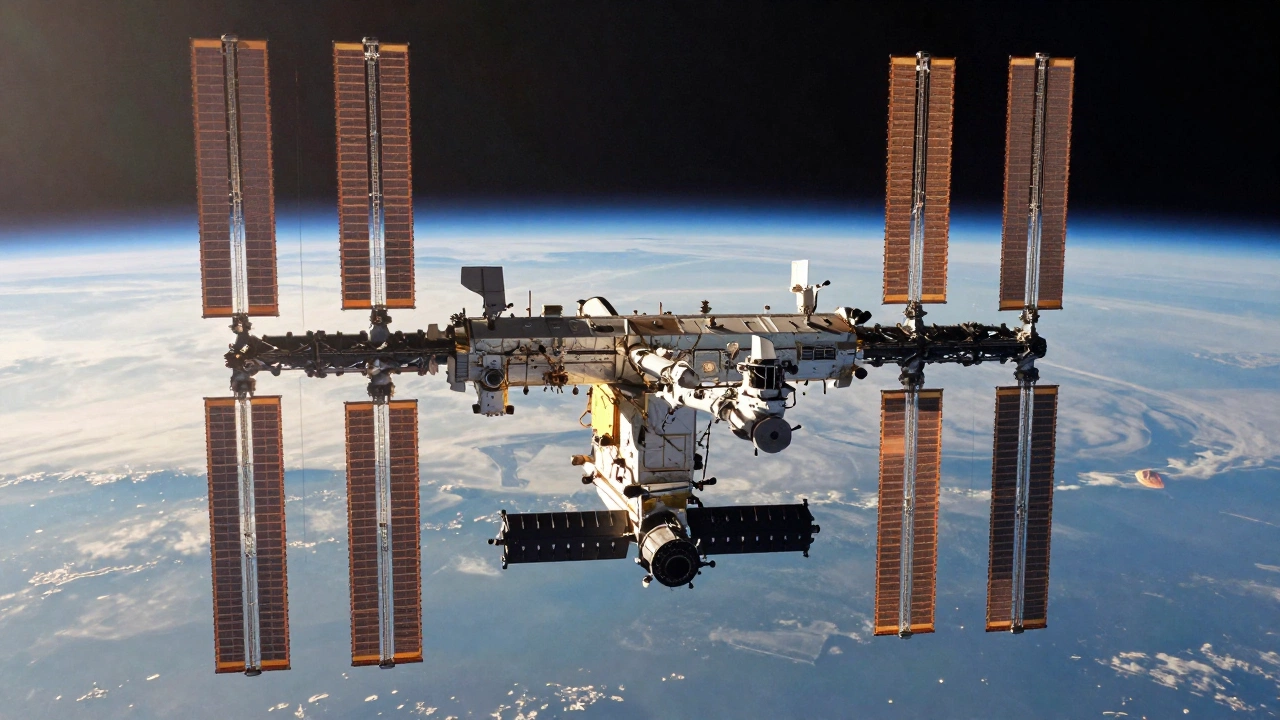
You might assume the International Space Station stands alone as humanity’s main outpost in space. Yet China’s Tiangong proves a different story. This fully independent station delivers steady science, handles emergencies with speed, and charts a path toward deeper exploration. In this guide, you will see the key details behind its success and why its progress often stays out of the spotlight.
The Rise of an Independent Chinese Space Station
Why China Built Tiangong After ISS Exclusion
Back in 2011 the Wolf Amendment blocked NASA from major cooperation with China. You can trace Tiangong directly to that decision. Instead of joining an existing program, China relied on its own Shenzhou and earlier test stations to create a permanent home in orbit. The result is a capable platform that shows self-reliance works. And you get a clear view of how one nation can advance without outside help. This independence fuels rapid decisions that sometimes outpace slower international efforts.
Cultural Roots and Program History
The name Tiangong means Heavenly Palace. It connects modern engineering to centuries of Chinese sky lore. The station builds on lessons from Tiangong-1 and Tiangong-2, both of which hosted short visits before controlled reentry. You see steady progress across decades of the crewed space effort known as Project 921-III. Each step added knowledge about life support, docking, and long stays. Today the station runs as a true national lab with real-world results you can track from Earth.
How Tiangong Shifts Your View of Global Space Power
When you examine Tiangong you notice a third country operating its own long-term station after Russia and the United States. This fact rarely leads mainstream talk in some circles. Yet it signals a changing balance. You gain new options for research and future missions. The station’s steady operation since mid-2022 proves reliability matters more than size alone. Its story encourages you to look beyond old partnerships and consider fresh paths in low-Earth orbit.
Inside the Station: Modules, Size, and Capabilities
Tianhe Core Module Powers Daily Operations
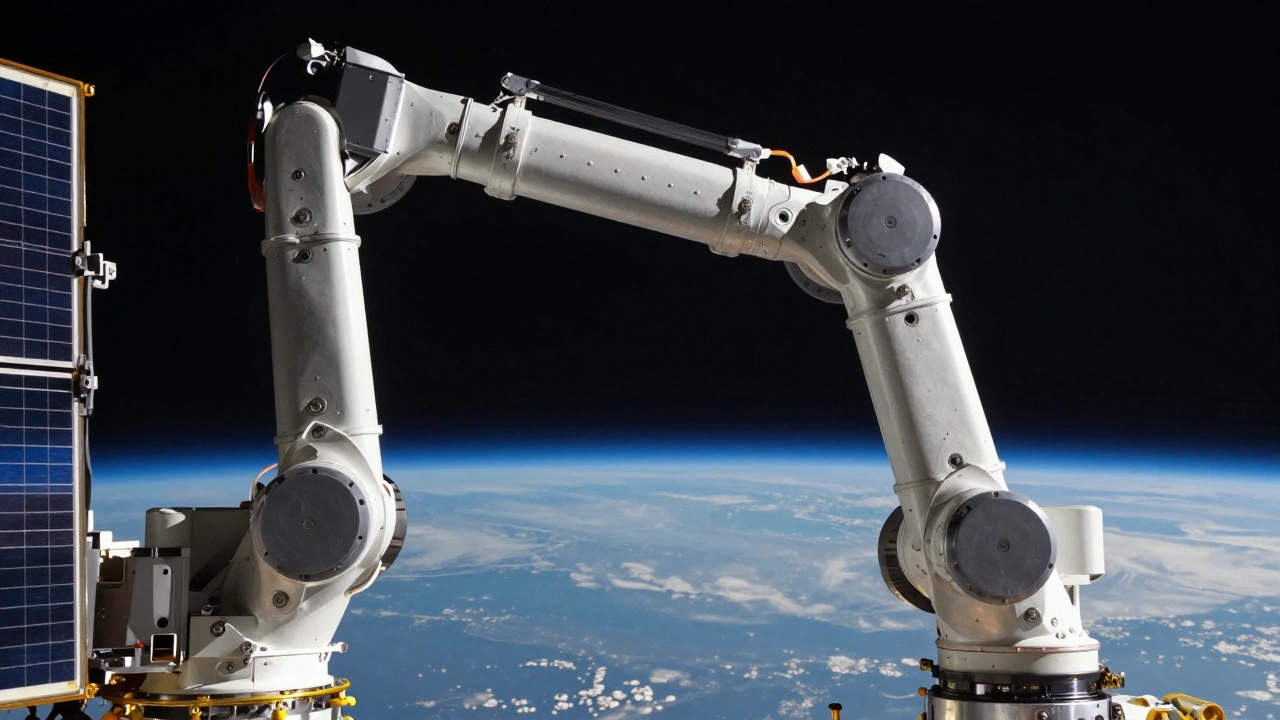
Tianhe launched on a Long March 5B rocket on April 29 2021. This central hub holds living quarters, a kitchen equipped with a microwave and air fryer for meals like chicken wings or steak, plus exercise gear and life support hardware. You would find advanced systems that recycle urine into drinking water. The module also carries a ten-meter robotic arm known as Chinarm. Its propulsion and guidance units keep the whole station stable. Twelve control moment gyroscopes deliver precise pointing without wasting fuel.
Wentian and Mengtian Lab Modules Complete the Design
Wentian reached orbit on July 24 2022. It focuses on life sciences and carries an airlock for spacewalks plus a shorter five-meter robotic arm. External platforms on this module offer twenty-two spots for experiments exposed to vacuum and radiation. Mengtian followed on October 31 2022. Its racks support physics and materials work while a cargo airlock moves payloads without crew help. Together the three pieces form a T-shaped station roughly fifty-six meters long. You can see how each addition expanded research space and backup systems.
Key Technical Numbers and Orbit Facts
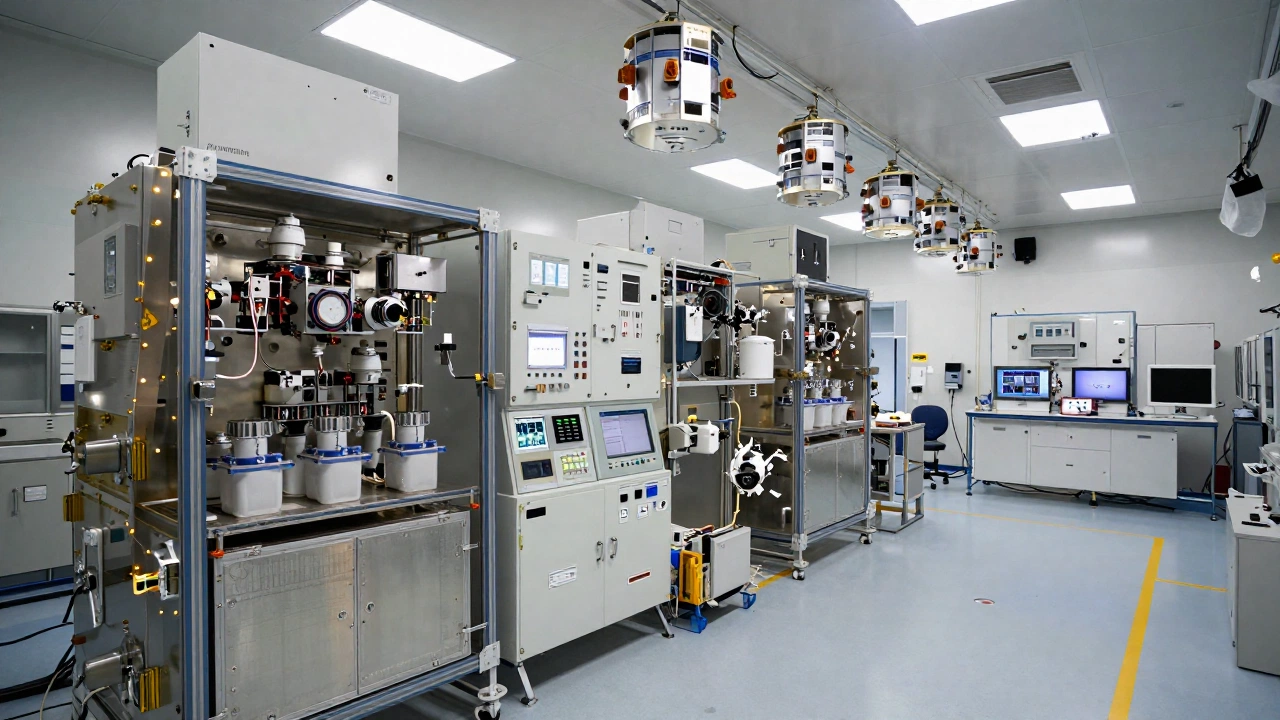
The finished station weighs one hundred metric tons and provides three hundred forty cubic meters of pressurized volume with one hundred twenty-two cubic meters habitable. That equals about one quarter the mass of the much larger international station. It flies at an average altitude near three hundred ninety kilometers with a forty-one point five degree inclination and ninety-two point three minute orbit period. Solar arrays generate electricity while ion thrusters fine-tune position. The design targets ten to fifteen years of service with room for later upgrades. A table below compares the modules.
| Module | Launch Date | Primary Role | Special Features |
|---|---|---|---|
| Tianhe | April 29, 2021 | Living and command | Kitchen, gym, 10m robotic arm |
| Wentian | July 24, 2022 | Life sciences lab | EVA airlock, 5m arm, 22 external adapters |
| Mengtian | October 31, 2022 | Physics and materials | Cargo airlock, 37 external adapters |
Life on Board and the People Who Make It Work
Daily Routine With Food Variety and Training
Standard crews of three taikonauts stay six months with room for six during crew changeovers. You would choose from around one hundred twenty food items including familiar favorites prepared to reduce crumbs in zero gravity. Noise levels stay managed and ventilation keeps air fresh. Exercise equipment prevents muscle loss while tablets and Wi-Fi help crews stay connected to ground teams. These comforts let people focus on science instead of basic survival. Continuous human presence began in June 2022 and has not stopped since.
Record Spacewalks and Emergency Skills
Chinese astronauts have completed numerous EVAs including one that lasted nine hours and six minutes. Commander Zhang Lu has taken part in six spacewalks by early 2026 setting a national benchmark. You see how these activities test suits, tools, and procedures. In one recent case the crew inspected a damaged spacecraft exterior during an unscheduled outing. Such work builds confidence for future repairs and construction tasks. The station also deploys small satellites and practices robotic maintenance without constant human input.
Notable Taikonauts and Team Efforts
Early visitors included Nie Haisheng, Liu Boming and Tang Hongbo on the first crew in 2021. Wang Yaping became the first Chinese woman to live aboard. Later teams such as Chen Dong, Liu Yang and Cai Xuzhe assembled modules during long missions. Zhang Lu, Wu Fei and Zhang Hongzhang formed the crew that handled a major 2025 contingency. Each person brings military test pilot experience and hundreds of hours of simulation training. Their calm approach during surprises shows program maturity you can trust.
Scientific Output and International Ties
Experiments That Span Many Fields
More than one thousand approved projects have run on Tiangong. You find studies on rice and Arabidopsis plants to improve future food growth, biotechnology, fluid behavior, combustion, and new materials. In 2025 alone thirty-one fresh projects flew up with eight hundred sixty-seven point five kilograms of hardware. Eighty-three point nine two kilograms of samples returned generating over one hundred fifty terabytes of data and more than fifty patents. These results feed both practical applications and pure discovery. Internal racks and outside platforms give researchers many ways to expose samples to microgravity.
Partners From Seventeen Countries Join In
Despite limited NASA contact the station welcomes work chosen through the United Nations Office for Outer Space Affairs. Scientists from seventeen nations have placed experiments aboard. A Pakistani astronaut will visit for a short stay soon. You see China inviting broader participation as the station matures. This openness contrasts with earlier isolation and hints at possible future global labs. Data flows back to many research teams creating knowledge that benefits everyone on Earth.
High Volume of Launches Supports the Station
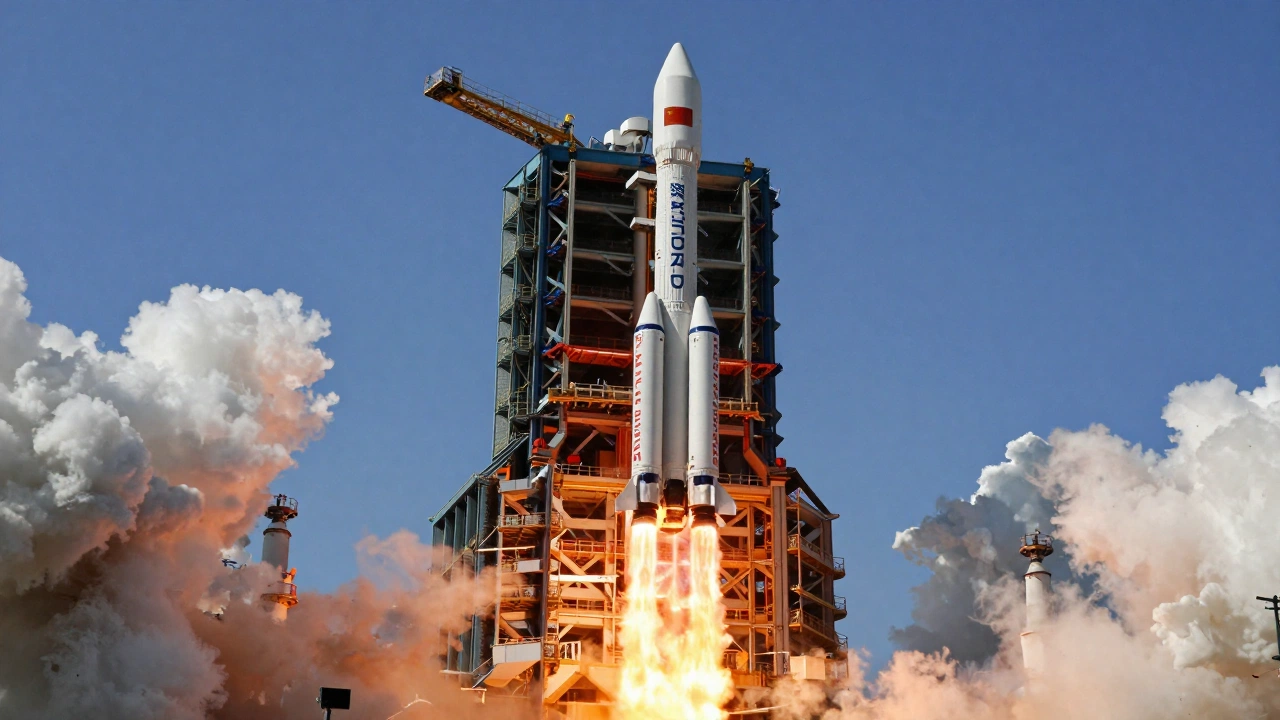
China completed seventy-two orbital launches in 2025 a thirty percent jump from the year before. Tianzhou cargo ships and Shenzhou crew vehicles keep Tiangong stocked. You notice how this launch cadence allows steady resupply and experiment exchange. The pace also supports testing of new hardware bound for deeper space. Each mission adds to the station’s growing legacy of reliable operations.
The 2025 Debris Event and Swift Recovery
Damage to the Return Spacecraft
A suspected piece of space debris struck the viewport of the Shenzhou-20 return vehicle in 2025. The impact delayed the normal crew rotation and left the station without an immediate rescue craft. You can imagine the tension as teams on the ground assessed risks. The event tested every part of the safety net built over years of careful planning. Yet it also revealed strengths that few outsiders expected.
First Emergency Uncrewed Launch Restores Safety
On November 25 2025 China launched an uncrewed Shenzhou-22 on a Long March 2F rocket from Jiuquan. The craft docked the same day carrying repair parts. This marked the country’s first emergency crewed-class flight. The Shenzhou-21 crew including Zhang Lu used the new vehicle to plan their return around April 2026. An EVA inspected the damaged craft up close. You see how rapid response within weeks restored full emergency capability. The station never lost its permanent crew.
What the Incident Reveals About Program Strength
The quick fix demonstrated mature launch systems, reliable docking, and calm crew leadership. It stands in contrast to other programs facing repeated delays. You gain confidence that Tiangong can handle surprises in orbit. The event also prompted new focus on debris tracking and shielding. Lessons learned will shape expansion plans and make future missions safer for everyone involved.
Future Expansion, Telescope Pairing, and Lunar Path
Plans to Grow the Station to Six Modules
Starting around 2027 you could see Tiangong expand to six modules and nearly one hundred eighty metric tons. New robotics, better debris shields, and even 3D printing in orbit will join the mix. These upgrades prepare the station for longer visits and more complex science. You will watch as it evolves from a three-module outpost into a larger research hub ready for the next decade of discovery.
Co-Orbiting With the Xuntian Space Telescope
Late in 2026 China will launch the Xuntian telescope on another Long March 5B. Its two-meter mirror and two point five gigapixel camera offer a field of view three hundred times larger than Hubble. The instrument will survey forty percent of the sky over ten years studying galaxy birth, dark energy, and cosmic history. Because it flies near Tiangong astronauts can service and upgrade it during future visits. This pairing gives you an unbeatable combination of human presence and powerful observation.
Longer Stays and the Road to Crewed Moon Landings
One astronaut on the upcoming Shenzhou-23 mission will stay a full year. That milestone builds skills needed for journeys beyond low-Earth orbit. China also prepares the Mengzhou spacecraft and Long March 10 rocket for tests in 2026. These vehicles aim to carry people to the lunar surface in coming years. Tiangong acts as the training ground and technology testbed for that goal. You see how each success here feeds directly into ambitions on the Moon and eventually Mars.
China’s Tiangong shows what focused effort can achieve. You now hold the facts behind its modules, science, resilience, and roadmap. The station operates smoothly, welcomes global experiments, and prepares for bigger steps. While direct NASA ties remain limited the progress stands on its own. Keep watching the Heavenly Palace. Its story will shape the next era of peaceful space use for all of us.